
Stainless Steel Sheet for Dairy & Food Processing: Grade & Finish Guide
Stainless steel sheet for dairy and food processing should default to 304 or 304L as the food-contact grade. Both are austenitic, non-reactive and easy to clean, and they hold up against milk, food acids and CIP cleaning. Step up to 316 or 316L wherever salt, acid, brine or CIP chemicals come into play; the roughly 2% molybdenum in 316 gives it that extra edge against chloride attack. For dry, non-contact and external panels, 430 does the job. Aggressive high-chloride brine calls for duplex 2205.
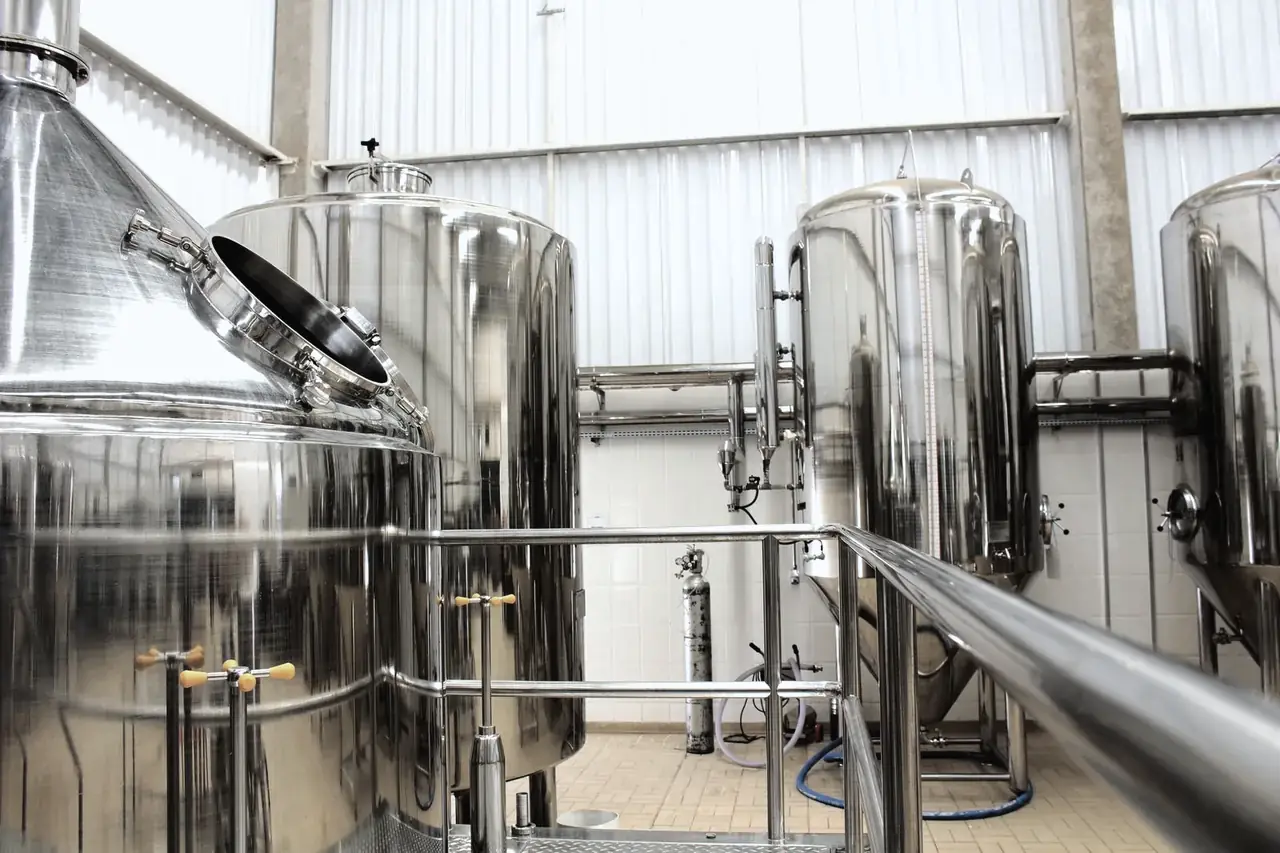
Always buy mill-certified genuine Jindal material to ASTM A240 / IS 6911, and insist on a mill test certificate (MTC). That way the grade and heat stay traceable for your food-safety records.
Relinox Stainless holds an authorized MoU partnership with Jindal Stainless Limited (JSL) for stainless flat products. That doesn't extend to Jindal SAW, JSW Steel or JSPL, and it doesn't include SAIL Salem either. We supply genuine JSL-melted food grade stainless steel sheet, dispatched pan-India from our stock point at Ajmeri Gate, Delhi, one of the city's main stainless steel markets.
Which stainless steel grade for dairy & food processing?
Stainless steel gets picked for food processing and the wider food industry for one reason: it won't react with what's inside it, it's easy to clean, and it holds up against food acids, milk, brine and repeated CIP (clean-in-place) chemical washing. The recognized food contact steel sheet choices are the austenitic chromium-nickel grades, 304/304L and 316/316L. 316 brings molybdenum into the mix, which matters in salty and acidic environments. As for the classic 304 vs 316 for food processing question, the answer is straightforward: stick with 304 unless chlorides, salt or aggressive acids are in the picture, and only then step up to 316. For the full breakdown, see the 304 vs 316 for food processing comparison.
| Grade | Key trait | Best for (food/dairy use) | Notes |
|---|---|---|---|
| 304 / 304L | Austenitic Cr-Ni, non-reactive, cleanable | General food-contact: milk tanks, panels, tables, hoppers | Default food-contact grade; 304L for welded fabrication. SS 304, the default food-contact grade |
| 316 / 316L | Adds ~2% molybdenum for chloride resistance | Salt, acid, brine & CIP-chemical exposure, cheese brine, whey, pickling, sauces | 316L for welded food equipment. SS 316 for salty & acidic food environments · 316L for welded food equipment |
| 430 | Ferritic, magnetic, lower-cost | Dry / non-contact panels, external cladding, guards | Not for wet product contact. 430 for dry / non-contact panels |
| Duplex 2205 | High strength, high chloride resistance | Aggressive high-chloride brine, concentrated salt lines | Available against indent. duplex 2205 for aggressive brine |
For the definitional background on what makes a grade suitable for food contact, see what makes stainless steel food grade. The composition and corrosion figures above aren't guesswork; they track standard published values under ASTM A240, along with JSL's published data.
Grade by food-processing segment
Grade and finish shift depending on what the surface actually touches. The table maps common segments to a typical grade, finish and thickness: dairy grade stainless steel and milk tank SS sheet for creameries and cheese plants, plus the right pick for beverage, meat, seafood, bakery and confectionery lines.
| Segment | Typical grade | Typical finish | Typical thickness |
|---|---|---|---|
| Dairy / milk & cheese (creamery, cheese plant) | 304/304L; 316L for cheese brine & whey | No.4 / 2B / BA | 1.0–3.0 mm |
| Beverage (juice, soft drink, brewery) | 304/304L; 316 for acidic/citrus lines | No.4 / 2B | 1.0–2.0 mm |
| Meat & seafood | 316/316L (salt & brine) | No.4 / 2B | 1.0–3.0 mm |
| Bakery / confectionery | 304/304L | No.4 / 2B / mirror | 0.8–2.0 mm |
| General food processing plant | 304/304L default; 316 in wet/acidic zones | No.4 / 2B | 0.8–3.0 mm |
Stainless steel for milk processing / creamery / cheese plant duty is 304/304L for general milk contact and 316L where cheese brine, whey or CIP chemicals bite. Stainless steel sheet for bakery / confectionery / meat / seafood follows the same rule: 304 for dry and mild-acid contact, 316 wherever salt and brine are in play. Note the scope: our focus here is food-contact material choice for dairy and food plants; for equipment-maker specifications see pharma & dairy equipment fabrication, for reactor and CIP-chemical vessels see chemical process plants, and for worktables, sinks and benches see commercial kitchen equipment.
Which finish & thickness for food-contact surfaces?
A hygienic or sanitary finish stainless steel sheet (2B / No.4) is what gives a food-contact surface its cleanability. It's smooth enough that residues rinse and wipe away, with nowhere for bacteria to hide. Hygienic-design practice calls for exactly that: a smooth, cleanable finish on product-contact surfaces, usually No.4 (brushed/satin) or 2B. The material ships as mill finish first. Where a brighter surface is wanted, it gets polished further as job-work.
| Finish | Description | Where used |
|---|---|---|
| 2B | Cold-rolled, smooth matte mill finish | Tanks, panels, hidden or lightly-handled contact surfaces |
| No.4 (brushed) | Satin / directional brushed, the common hygienic finish | Tables, hoppers, visible food-contact panels, trolleys |
| BA (bright annealed) | Bright, reflective, very smooth | Cleanable product-contact surfaces, dairy interiors |
| Mirror | Highly polished, reflective (job-work) | High-hygiene or display food-contact surfaces where specified |
More detail on each surface is in the SS finishes explained guide. Dairy panels and tanks generally run 1.0–3.0 mm, though larger vessels call for heavier plate. The standard sheet size is food grade steel sheet 8x4 (1250×2500 mm, sometimes written 4×8). Beyond that, you'll find 4×10 and 5×10 sheets, plus coil and patta / patti strip used for wrapping and edging.
| Form | Standard size (mm / ft) | Thickness range |
|---|---|---|
| Sheet, 8x4 (4×8) | 1250×2500 mm / 8×4 ft | 0.3–3.0 mm |
| Sheet, 4x10 | 1250×3050 mm / 4×10 ft | 0.8–3.0 mm |
| Sheet, 5x10 | 1500×3000 mm / 5×10 ft | 1.0–3.0 mm |
| Plate (heavier vessels) | Cut-to-size to drawing | 3–12 mm+ |
| Coil | 1250 / 1500 mm wide | 0.3–3.0 mm |
| Patta / patti (strip) | Slit to width | 0.3–3.0 mm |
For weight-per-sheet planning, check the SS sheet weight chart and the stainless steel weight calculator instead of relying on a restated figure here. For heavier vessels, look at SS plate for heavier vessels. For ends and dished blanks, go with SS circles. Base sheet needs are covered by stainless steel sheets, and strip requirements fall under SS patta / strips.
Food-contact compliance & FSSAI
India's FSSAI food contact steel rules set out which materials are allowed to touch food, and 304/316 austenitic stainless has become the recognised fssai approved steel grade family for that work. It resists corrosion, cleans up easily and holds up under repeated hygienic washing. Stainless doesn't leach into food the way reactive metals do. That's precisely why it's the standard food contact steel sheet across dairy, beverage and food processing plants.
Relinox supplies the certified base metal. Food-safety compliance of the finished equipment, though, comes down to the fabricator's design and validation work. We make no claim to any FSSAI certification of our own.
Jindal Stainless produces this material to ASTM A240 / IS 6911. That conformance is mill conformance, and it's carried on the mill test certificates (MTC) explained document, not on a Relinox certification. For the standards themselves, see ASTM A240 and IS 6911.
Jindal Stainless supplies dairy and food-processing sheet and plate to ASTM A240 / IS 6911, melted and rolled in-house. Every dispatch ships with a mill test certificate (MTC) recording grade, heat, and properties. Ask for a sample MTC when you submit your RFQ.
Forms & processing we supply
Food processing equipment stainless steel is supplied across the full flat-product range: sheet, plate, coil, circle and strip. We also handle cut-to-size and shearing job-work, plus perforation and designer finishing as job-work on Jindal sheet, which comes in handy for perforated sheets (screens, drainage panels) and stainless steel coils for tank wrapping. Send us a cutting list and we'll cut to your equipment sizes. If you're after adjacent scopes, water storage tanks and utensils & kitchenware each have their own dedicated page.
Why buy dairy / food-grade SS from Relinox
Relinox Stainless is an authorized MoU partner of Jindal Stainless, which means genuine JSL-melted flat products come through us, not re-rolled bazaar stock. Every dispatch carries a mill test certificate. We stock the full austenitic grade range (304/304L/316/316L and more) cut-to-size, and we dispatch pan-India from our Ajmeri Gate base, one of Delhi's main stainless steel markets. Read more about the partnership here: Jindal MoU partnership.
Whether you typed in food grade ss sheet dealer, distributor, stockist, trader, or supplier in India, or went looking specifically for a jindal ss 304 food grade sheet dealer / stockist near me, you've landed in the right spot. That's our lane, as an authorized MoU-partner channel. Relinox is a distributor and stockist of Jindal-produced sheet, not a steel producer. It's the honest way to position genuine mill-certified material, and the correct one. Buyers in specific cities searching for a food grade ss sheet supplier delhi / mumbai get pan-India dispatch either way. Start at our Delhi stainless steel sheet dealer page or the Mumbai served-area page. There are no fake local branches here.
On price: there's no fixed number for food grade ss sheet price / rate per kg. The dairy wala ss sheet / food grade steel sheet rate moves with grade (304 vs 316), thickness, finish and quantity. Check the today's indicative 304 sheet rate, the indicative 316 sheet rate, or the full indicative price list, and confirm the live figure on your enquiry. We never quote a number blind.
MTC's dairy and food-processing customers can request a quote directly. Send your grade, finish and cutting list through the request a quote with MTC form, and fabricators can use the RFQ form to get today's rate.
FAQ
Which stainless steel grade is used in the dairy industry?
304 and 304L cover most milk-contact surfaces, while 316 or 316L come into play wherever cheese brine, whey or CIP-chemical exposure is a factor. Both are austenitic, non-reactive and easy to clean. See SS 304 and SS 316.
Is SS 304 food grade / food safe?
Yes, ss 304 for dairy and general food work (ss 304 dairy, 304 food grade sheet) is the standard food-contact austenitic grade: non-reactive, corrosion-resistant and easy to clean. See what makes stainless steel food grade.
304 or 316 for food processing, which do I need?
Use 304 unless chlorides, salt or aggressive acids are in the mix; step up to ss 316 / 316L for food processing of salty or acidic products. Full detail in the 304 vs 316 comparison.
Is stainless steel FSSAI approved for food contact?
FSSAI regulates food-contact materials in India, and 304/316 stainless steel is the recognised food-contact choice. Relinox supplies the certified base metal; whether the finished equipment actually complies comes down to the fabricator's design work.
What surface finish is required for food-contact stainless steel?
A smooth, cleanable finish, usually No.4 (brushed) or 2B, is standard hygienic-design practice. It lets residues rinse away instead of collecting. Mirror or BA suits jobs that call for a brighter surface. See SS finishes explained.
What is the best stainless steel grade for dairy / food industry use?
For most dairy and food-industry surfaces, 304/304L works fine as the default choice. Go with 316/316L when the metal will face salt, brine, acidic conditions or CIP chemicals. Reserve 430 for dry panels that see no contact at all.
What thickness and sheet size should I order?
Dairy panels usually run 1.0–3.0 mm, though heavier plate is used for large vessels. Standard sheets come in 8x4, 4x10 and 5x10, and coil and patta are also stocked; cut-to-size work is available on the RFQ.
Do you supply mill test certificates?
Jindal, under the MoU-partner channel, shares a mill test certificate (MTC) with dispatch. It records grade and heat. Ask for a sample MTC on your RFQ. See quality & mill test certificates.
Is this genuine Jindal Stainless material?
Yes, it is. We're an authorized MoU-partner channel, and everything we supply is genuine JSL-melted flat product, not re-rolled bazaar stock. Our principal is Jindal Stainless, not Jindal SAW, JSW or JSPL.
What is the price of food-grade SS sheet per kg?
It depends on grade, thickness, finish and quantity, and we never give out a blind number. Check the indicative 304 and 316 price pages, then confirm today's rate on the RFQ.
Can you cut sheets to my equipment sizes?
Yes, we handle cut-to-size and shearing job-work, with perforation and designer finishing available on request. Just send your cutting list along with the RFQ.
Do you deliver across India?
Yes, we ship pan-India from our stock point at Ajmeri Gate, Delhi. Just send your delivery location on the RFQ, and we'll confirm freight.
Related links
- SS 304 · SS 304L · SS 316 · SS 316L
- SS 430 for dry / non-contact panels · Duplex 2205 for aggressive brine · all grades
- What makes stainless steel food grade · 304 vs 316 for food processing · SS finishes explained
- Stainless steel sheets · SS plate for heavier vessels · SS circles · SS patta / strips
- SS sheet weight chart · Weight calculator · ASTM A240 · IS 6911
- Related uses: pharma & dairy equipment · chemical process plants · commercial kitchen equipment · water storage tanks
- Quality & mill test certificates · Jindal MoU partnership · Delhi dealer · Request a quote
Get today's rate
Send your requirement once, we reply the same working day with today's rate, availability and dispatch time. Mill test certificate with every dispatch. GST invoice on every sale.